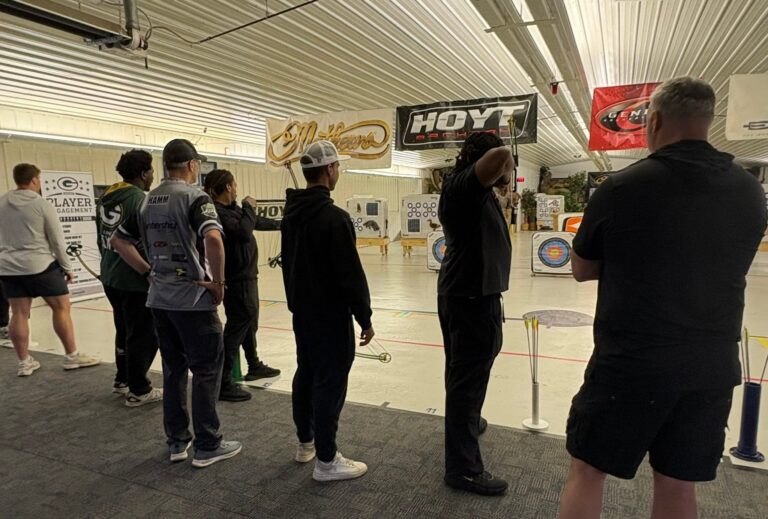
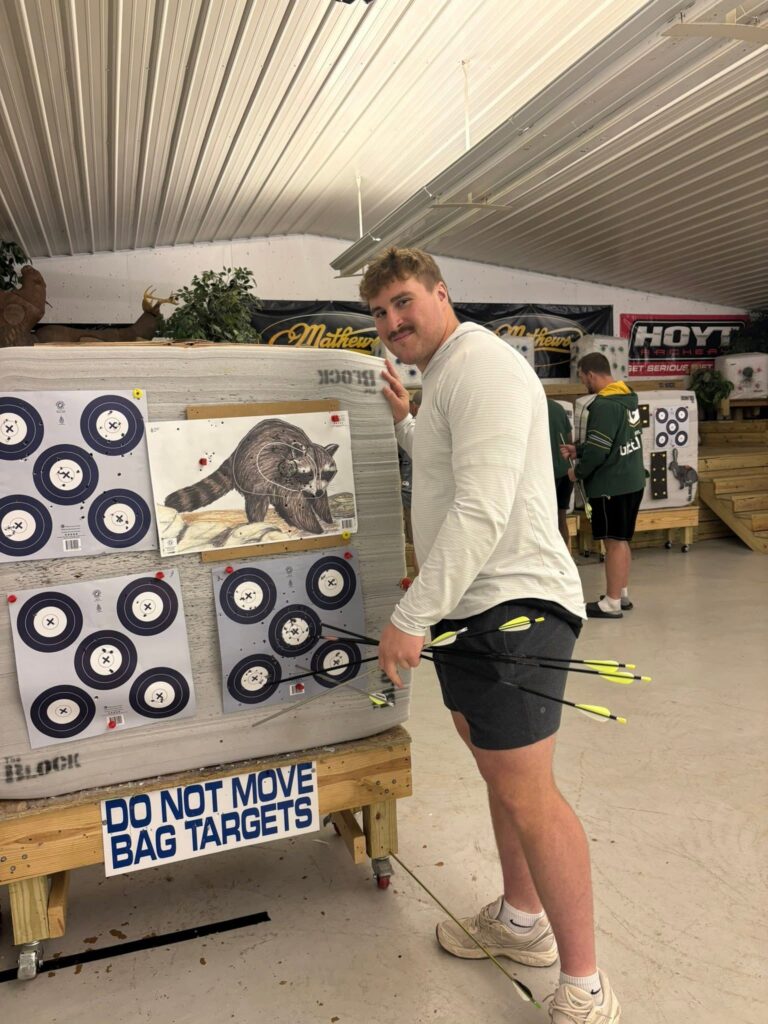
In football, players must know the assignment, line up correctly, use the right technique and execute. Archery follows a similar sequence. Stance, breathing, draw, anchor, aim, release and follow-through each play a role in the shot. Overlook one step, and the result can change.
Coleman uses that comparison to reinforce preparation and personal responsibility. When an arrow misses the mark, the archer can assess the shot, make an adjustment and try again. Learn from the miss and move on.
The program also gives rookies a chance to compete in a setting where the outcome isn't tied to a game or a roster spot. During one activity, players aim for a specific color on the target. The challenge brings out their competitive sides, but Coleman encourages them to recognize and celebrate one another's successful shots.
One rookie arrived thinking he was required to participate. Coleman explained that archery was optional but encouraged him to give it a try.
“We had one rookie come in thinking he had to be there. I told him it was completely optional but asked him to give it a few shots. He ended up being the last one to leave. That's what I love about it. Someone comes in not knowing if they'll enjoy archery, and before long, they're hooked,” Coleman said.
For Coleman, that's part of the value of introducing rookies to archery. Some players have taken the interest home, shooting in their backyards or introducing their children to the sport. Others are exploring bowhunting and looking forward to getting back to the range.
Player development is about more than preparing for the next game. It's also about giving rookies experiences and interests that can stay with them long after their football careers.